I have been a follower of Jesus our Messiah for over a quarter-century. Throughout my journey I have had the pleasure of interacting with many expressions of our faith including Roman Catholicism, Greek Orthodoxy, Protestantism–including Protestant sub-categories such as the Anabaptists–as well as lesser known minority movements. Among all of these denominations of Christendom I have repeatedly witnessed confusion surrounding the Law of God. Some claim, as Pastor Andy Stanley publicly stated, Believers in Jesus must “unhitch” themselves from the Old Testament, omitting even the moral precepts contained therein. Others assert, as the Pharisees who converted to Christ did, that “it is necessary to circumcise them and to direct them to observe the Law of Moses” (Acts 15:5). In light of this, it has become quite evident that the present-day family of Believers–including clergy–are tremendously under-equipped to answer the following important question:
“What commandments are we to obey as Disciples of Christ?”
The fact that there are commandments for the genuine Christian to observe is quite evident in the New Testament. For example, John argues that someone who claims to be a Disciple, but does not obey the Lord’s commands, is a fraud and consequently is not saved. He writes the following in his first epistle:
By this we know that we have come to know Him, if we keep His commandments. The one who says, “I have come to know Him,” and does not keep His commandments, is a liar, and the truth is not in him.
1 John 2:3-4
How could John, the Disciple whom Jesus loved (John 13:21), arrive at this conclusion while so many today confidently assert that merely stating “Jesus is Lord” is all it takes to be saved? Moreover, very few Protestants would tolerate the words of James if one merely said them without citing the verse–“you see that a man is justified by works and not by faith alone” (James 2:24). As a result of these observances, it is quite evident a multitude of Believers have lost sight of the Pauline doctrine that the true reception of God’s grace inevitably results in “the obedience of faith” (Rom 1:5). Quite simply, if we love God, we love and keep His commandments.
For this is the love of God, that we keep His commandments; and His commandments are not burdensome”
1 John 5:3
On the matter of sexual purity, Paul reminded the Thessalonians “for you know what commandments we gave you by the authority of the Lord Jesus,” (1 Thess 4:2) indicating to us that there remains a formal system of commandments by which Christians are to live their lives. In addition, John reminds us that our love for God is actually demonstrated by our obeying Him–“For this is the love of God, that we keep His commandments; and His commandments are not burdensome” (1 John 5:3). This sentiment is repeatedly witnessed throughout the New Testament epistles, and we are frequently cautioned that if our behavior doesn’t align with our confession of Christ, we have “suffered shipwreck” (1 Tim 1:19) in the faith and become “worse than an unbeliever” (1 Tim 5:8). If one lives in rebellion of the commandments, regardless of their confession of Christ, they are an apostate.
“Not everyone who says to Me, ‘Lord, Lord,’ will enter the Kingdom of Heaven, but he who does the will of My Father who is in heaven will enter… And then I will declare to them, ‘I never knew you; DEPART FROM ME YOU WHO PRACTICE LAWLESSNESS.’
Matthew 7:21-23
Jesus frequently affirms obedience is a natural and necessary result of faith in Him by making statements such as “if you love Me, you will keep My commandments” (John 14:15). When considering Jesus is the Word of God made flesh, this proclamation suggests every commandment from Genesis to Revelation remains in effect for the Believer in Jesus. This is compounded by the Sermon on the Mount when Jesus proclaimed:
Do not presume that I came to abolish the Law or the Prophets; I did not come to abolish, but to fulfill. For truly I say to you, until heaven and earth pass away, not the smallest letter or stroke of a letter shall pass from the Law, until all is accomplished!”
Matthew 5:17-18
The content of the next subsection may contain one of the most important revelations a Believer can receive during their walk with the Lord Jesus. I am hesitant to oversell it, but the understanding presented here will help alleviate many misunderstandings regarding the Law of God and how to properly apply it in our lives. Far too many hours have been spent revisiting a debate on the Law of Moses, known as the Torah, that the Apostles considered and concluded during the Council of Jerusalem in Acts 15. Stemming from this impassioned deliberation among the original 12 disciples, the converted Pharisees, and the Apostle Paul among others, the book of Galatians and of Hebrews were written. Contained within these epistles is the necessary enlightenment one must receive to properly understand which commandments remain active (Rom 13:9) and which are fulfilled (Heb 9:1,10, 1 Cor 5:7) by Jesus’ death and resurrection.
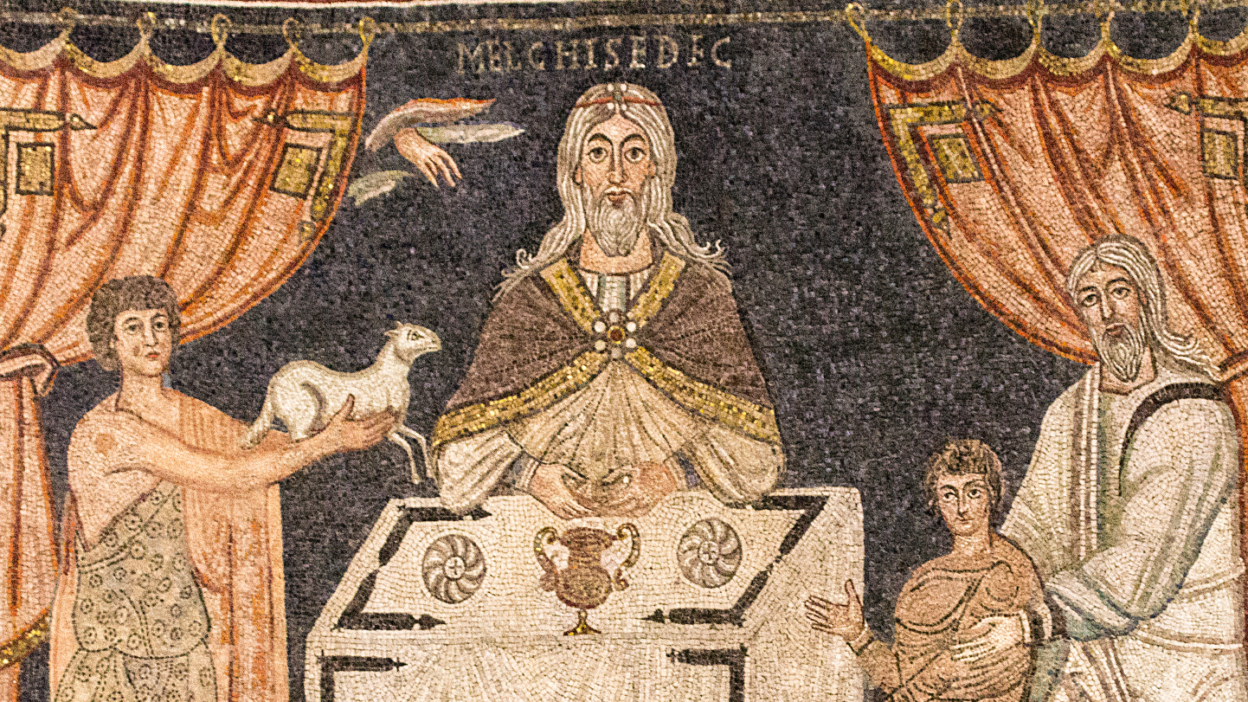
The Order of Melchizedek
The first step in reunifying the Church and developing a consistent ethical framework among those who have made the Good Confession is our collectively understanding the priesthoods witnessed in Scripture and accurately discerning by which one we are presently governed. As mentioned prior, the Book of Hebrews spends a considerable amount of time introducing us to what the author designates as the Order of Melchizedek–the priesthood by which our Lord Jesus serves as High Priest.
For it is attested of Him, “You are a priest forever According to the order of Melchizedek.”
Hebrews 7:17 (Psalm 110:4)
During the Exodus, the Living God led the Prophet Moses to establish the Levitical Priesthood, with offices occupied solely by males from the Tribe of Levi, under its first High Priest, Aaron the brother of Moses. This priesthood was tasked with carrying out the circumcision of newborn males on their eighth day, maintaining proper temple worship protocols, offering sacrifices of material goods, and teaching the Law of Moses to the common people. Although this priesthood is prominently established in the Biblical narrative, and is active during the first advent of Christ, it remains subordinate to the priesthood which preexisted it–the Priesthood of Melchizedek.
And Melchizedek king of Salem brought out bread and wine; now he was Priest of God Most High.
Genesis 14:18
We encounter Melchizedek, the ancient Priest of God Most High, with curious brevity following Abraham’s campaign against the pagan kings who had taken his nephew Lot captive in Genesis 14. Melchizedek, meaning “King of Righteousness,” appears for merely three verses of Scripture and vanishes from the narrative until Psalm 110 when King David is inspired by the Holy Spirit to write a messianic prophecy that would one day confirm both Christ’s deity and priesthood. In the fourth verse, David writes “You are a priest forever, according to the Order of Melchizedek” (Psalm 110:4).
Apart from Abraham’s mysteriously short-lived meeting with Melchizedek, and David’s enigmatic messianic prophecy centuries later, we hear nothing more of this ancient priest or his divine order until Hebrews, a book which curiously has no recorded authorship (though I believe the author is Barnabas as he is both a Levite and an Apostle with an extensive knowledge of the priesthoods, see Acts 4:36). Nearly two thousand years after Abraham, the connection between Melchizedek and Jesus is finally made by divine revelation, and yet many Believers remain largely unaware of the monumental impact this declaration has on us all—Jesus “has become a High Priest forever, in the Order of Melchizedek” (Heb 6:20).
Herein lies the vital revelation necessary for discerning which commandments apply to the Believer and which do not; Jesus was not born to the Tribe of Levi and, consequently, is not a Levitical Priest. Moses worshiped the same God we do today, but he established the Levitical Priesthood; a priesthood which, by virtue of its younger age, is subordinate to the priesthood of Melchizedek. As Scripture states, “but without any dispute the lesser is blessed by the greater” (Heb 7:7).
In light of God’s grace, a substantial population of Believers today considers obedience an optional burden rather than the very demonstration of the faith they profess. This conclusion naturally produces a culture of lawlessness among nominal Christians, who exchange the necessary process of sanctification for a shallow “God loves me therefore I need never change” attitude. It’s a disappointing result of Pastors seeking high baptism numbers for their annual reports while neglecting the, admittedly difficult to quantify, lifetime discipleship success rate. These evangelists ignore Jesus’ teaching that a person “cannot be my Disciple” (Luke 14:26) without hating their life and giving up all they possess in service to their King. Instead they erroneously proclaim to the masses they need do nothing, not to mention die to self, when they come to Christ.
“If anyone comes to Me, and does not hate his own father and mother and wife and children and brothers and sisters, yes, and even his own life, he cannot be My disciple.27 Whoever does not carry his own cross and come after Me cannot be My disciple.”
Luke 14:26-27
If James dedicated his epistle to addressing the risks of Lawless Grace, Paul devoted his Galatian letter to the opposite doctrinal ditch–Torah keeping among Gentile converts. This group is often comprised by those who rightfully reject the superficial commitment of the “Lawless Grace” community, correctly realizing their immense gratitude for salvation ought to be demonstrated by obeying their Savior. However, this expression of Christianity, historically known as “Judaizing,” departs from one extreme only to arrive at another.
The Gentile “Torah Keepers”–a peculiar name considering Jesus’ words in John 7:19–subject themselves to the Levitical Priesthood and, presumably, begin observing the 613 levitical laws of the Torah. In contrast to the Lawless Grace community, this brotherhood claims full observance of Torah–an impossible feat which Paul ardently warns severs adherents from Christ causing them to fall from grace (Gal 5:14). The Scriptures refer to this fraternal order as the “Circumcision Party,” not because they jubilantly celebrate the mutilation of their flesh—it’s actually quite painful for an adult like Abraham to have undergone—but because Paul refers to them as such in Galatians 2:12. In fact, the Jewish Pharisee turned Christian Apostle, Paul, expresses his exceptional disapproval of the Circumcision Party in his hyperbolic statement “I wish those who unsettle you would emasculate themselves!” (Gal 5:12 ESV).
Unfortunately, neither the Lawless Grace nor Torah Keeper movements arrive at the proper conclusion—the former rejecting any established priesthood or associated law system, the latter accepting the incorrect one and needlessly placing upon themselves “a yoke which neither our fathers nor we have been able to bear” (Acts 15:10). It becomes evident then that both schools of thought, in their neglecting the Order of Melchizedek, have departed from the straight narrow path and fallen into one of two erroneous responses to the commandments found in Scripture. If these two groups are incorrect regarding the Law of God, where do we turn to arrive at the truth?
Sanctify them in the Truth; your Word is Truth.
John 17:17
During our voyage through the seemingly endless number of commandments found in the Bible, Hebrews ensures we respond properly to each, insisting “when the priesthood is changed, of necessity there takes place a change of law also” (Heb 7:12). This enlightening statement refutes the Lawless Grace notion, confirming a priesthood and law system are certainly in effect, yet relieves us of the assumption that we’re bound to every ordinance in the Law of Moses (Heb 9:10). How can we be certain of this fact? The Word of God declares Christ’s priesthood is “according to the order of Melchizedek, and not be designated according to the order of Aaron” (Heb 7:11).
Therefore, Believers may rest assured they are neither adrift in a sea of lawlessness nor drowning in the hundreds of statutes found in the Torah. Scripture confirms Levitical Law served its purpose, being impossible to successfully keep and therefore making us desperate for salvation. As Paul says, “the Law has become our tutor to lead us to Christ, so that we may be justified by faith” (Gal 3:24). Moreover, when referring to a rebellious Israel, God Himself stated “I also gave them statutes that were not good and ordinances by which they could not live” (Eze 20:25). This passage of Ezekiel reveals to us that the Father created a dizzying labyrinth of statutes, having “…shut up all in disobedience so that He may show mercy to all” (Rom 11:32).
God’s desire to show us all mercy does not absolve us from our duty to obey Him, rather His mercy gives us the very reason and motivation for delighting in His Law–since the Lord is exceedingly good, His Law must be as well! Furthermore, our High Priest has declared to us that His disciples will live a life of obedience to His commandments, affirming that the children of God are those “who keep the commandments of God and hold to the testimony of Jesus” (Rev 12:17). Though we need not be compelled to choose between the false dichotomy of Lawless Grace vs Torah Keepers, we must diligently walk in the light of the Order of Melchizedek—a greater priesthood than that of Aaron’s—and consequently comprehend which covenant, and therefore which law system, we are blessed with the duty of observing.
Keep His Commandments
Moses wrote to the Israelites, “these commandments that I give you today are to be on your hearts. Impress them on your children. Talk about them when you sit at home and when you walk along the road, when you lie down and when you get up” (Deut 6:6-7). This directive remains as relevant today as it was at Sinai–we ought to be absolutely committed to the study and practice of the Word of God as well as instilling the same devotion in the next generation. Furthermore, the Scriptures make abundantly clear, if we truly love Jesus then we are to demonstrate our affection by obeying Him.
He who has My commandments and keeps them is the one who loves Me; and he who loves Me will be loved by My Father, and I will love him and will disclose Myself to him.”
John 14:21
As one may be tempted to assume, the diligent study of the Bible is not merely an optional practice for only the most committed of Believers, it’s for every Believer. Faith in the promises, prophecies, and Law of God, comes by continually hearing the Word (Rom 10:17, see Greek). When one begins to study the Scriptures more deeply, it becomes quite evident that a large portion of the Bible is made up of God’s Law and Case Law examples (see my Marriage Law Worksheet as an example of this reality). How then could we possibly ignore such a vast portion of Holy Scripture?
John’s epistles insist time and time again that we must not merely profess Christ but obey Him, being totally devoted to His will and pleasure above our own, and that we can only do this by keeping the commandments rendered us. John cautions us that one cannot truly know they are saved simply by making a verbal profession of Christ’s Lordship, there must be subsequent behavioral evidence to accompany the vocal confession. Though we cited this passage earlier, perhaps now it carries more weight:
“We know that we have come to know him if we keep his commands. Whoever says, “I know him,” but does not do what he commands is a liar, and the truth is not in that person”
1 John 2:3-4
If one publicly declares “I know Jesus” or “I love Jesus” and yet refuses to obey His Word, they reveal themselves a charlatan for Jesus said “whoever has my commands and keeps them is the one who loves me” (John 14:21) and “not everyone who says to Me, ‘Lord, Lord,’ shall enter the kingdom of heaven, but he who does the will of My Father in heaven” (Matt 7:21).
John is hardly the only Apostle to affirm this conviction. Paul likewise solemnly warns Titus that there are those who “claim to know God, but by their actions they deny him” (Titus 1:16). How many today do precisely the same? I fear the number of those who claim to know Christ yet remain on the way to destruction may be staggering. When the Church offers “free grace” yet fails to inform the masses that it will cost them everything, false conversion abounds. When is the last time you heard an Evangelist shout to the crowd of potential converts that “those of you who do not give up everything you have cannot be my disciples,” (Luke 14:33)? And yet the Lord Jesus saw fit to do so.
On trial before King Agrippa, Paul testified “first to those in Damascus, then to those in Jerusalem and in all Judea, and then to the Gentiles, I preached that they should repent and turn to God and demonstrate their repentance by their deeds” (Acts 26:20), confirming he was dedicated to the message of obedience being proclaimed in every city he preached (Rom 1:5). No doubt about it, true repentance must be evidenced by behavior modification, otherwise the repentance is incomplete. This is not to say that salvation is by works, but sanctification—the result of salvation—absolutely is an observable change in behavior. To the Romans Paul wrote “we received grace and apostleship to call all the Gentiles to the obedience that comes from faith for His name’s sake” (Rom 1:5). In response to these passages, I ask those who do not believe the commandments of God are binding on Christians, what then are we repeatedly compelled to “obey?”
The Moral Law of God
First, every commandment should be treated with the utmost respect as it proceeded from God. No Christian should ever mock or insult any of the Law of Moses, no matter how apparently “absurd” the modern greco-roman westernized mind may perceive it to be. As Paul informed the Roman Gentiles, “the law is holy, and the commandment is holy, righteous and good (Rom 7:12).” Whether an individual law applies in the New Covenant or not, I would counsel us to first approach it as being binding to us, rather than assuming it is not, and then with reverent caution consider if we’ve been released by our High Priest’s sacrifice or not.
In order to determine which portions of written law do not apply to us in the New Covenant–thanks to Jesus’ work to “fulfill them” (Matt 5:17) on our behalf–and which commands remain in effect for the Born Again Believer, we must first sort them by type. Written commandments found throughout Scripture can be organized into three primary categories:
- Moral Law
- Sacrificial Law
- & Ceremonial Law
Regarding sacrificial ordinances, most Christians would agree “there is no longer any offering for sin” (Heb 10:18) due to “the offering of the body of Jesus Christ once for all” (Heb 10:10). In other words, Jesus’ sacrifice on our behalf renders all sacrificial requirements fulfilled–His blood is sufficient and has satisfied all legal debts in this category, halleluYah!
having canceled out the certificate of debt consisting of decrees against us, which was hostile to us; and He has taken it out of the way, having nailed it to the cross.
Colossians 2:14
Regarding ceremonial mandates, Hebrews states these “relate only to food and drink and various washings, regulations for the body imposed until a time of reformation” (Heb 9:10). In one concise verse, we know which commandments can be sorted under Ceremonial, and more importantly that these were implemented only until the reformation of the New Covenant. From the beginning, these regulations–which did not apply during the priesthood of Melchizedek–were intended to expire upon Christ’s fulfillment of the Mosaic Law during His crucifixion.
Now He said to them, “These are My words which I spoke to you while I was still with you, that all things which are written about Me in the Law of Moses and the Prophets and the Psalms must be fulfilled.”
Luke 24:44
To further support the notion that written laws may be applicable only during a single dispensation—or divine era—and modified sometime thereafter, we ought to witness similar reformations during prior transition periods of Biblical history. Upon examination, one would discover Ceremonial Law has changed during different eras & priesthoods (Heb 7:12), thus confirming Hebrews 9:10’s bold statement. For example, food regulations have been observably modified due to various surrounding circumstances. In the Edenic Age, Adam was permitted to eat only plants (Gen 1:29), animals were not an acceptable food source as death—a sorrowful result of the Fall of Man in Genesis 3—had not yet entered creation. No death, no eating of meat allowed.
Due to the Fall of Man and our deviation from the original plan witnessed in Eden, God later permits Noah the consumption of all living creatures (Gen 9:3). It’s important to note that God expressly states “everything that lives and moves about will be food for you. Just as I gave you the green plants, I now give you everything.” Resulting from the fact that no animal foods have yet been declared dietarily “unclean” and therefore forbidden to consume, God utilizes the all inclusive Hebrew word “kōl” meaning “all, each, every, anything, totality, everything” is now on the menu during this dispensation. This becomes an irrefutable fact when Paul explicitly states “all food is clean” (Rom 14:20), an unmistakable result of Christ’s restoration of the Priesthood of Melchizedek confirmed by His statement “don’t you see that nothing that enters a person from the outside can defile them?” (Mark 7:18).
Furthermore, in the same way Christ’s fulfillment of various commands on our behalf releases us from practicing some while remaining bound to others, an approval to eat what was formerly unclean does not result in all actions that were formerly transgressions now being approved. Though we may be able to eat all living creatures, we cannot now murder a neighbor in the name of God’s Grace. God’s Law must be approached on a case by case basis, being assigned a category and deeply considered before concluding whether to practice or not. With each commandment we ought to ask, “is this Ceremonial, Sacrificial, or Moral? And what effect does it have on my neighbors?” then act accordingly. If Ceremonial or Sacrificial, it’s likely not binding, but if Moral (summarized by “Love thy neighbor”), it’s absolutely binding on Believers. We’ll discuss this in greater detail shorty.
For the whole Law is fulfilled in one word, in the statement, “You shall love your neighbor as yourself.”
Galatians 5:14
Regarding Sacrificial Law, such as the sacrifice of a lamb at Passover instituted during the Exodus, Christ serves as the true “Lamb of God” (John 1:29) who made atonement for us once for all. In his letter to Corinth, Paul declared “Christ, our Passover lamb, has been sacrificed” in place of the animal and therefore, as Jesus said would be the case, He fulfilled the Law in this area. Hebrews affirms Jesus ”offered one sacrifice for sins for all time” & consequently “there is no longer any offering for sin” (Heb 10:12, 18). We now offer ourself as “a living & holy sacrifice, acceptable to God” (Rom 12:1).
Accordingly, if Believers were to reinstitute the sacrifice of a lamb at Passover for the remission of their sins, they would be declaring Christ’s blood as insufficient for total forgiveness—an act of profound heresy. This temptation to submit oneself to the 613 laws of Torah is precisely why Paul warned the Gentiles considering full-torah observance;
“Mark my words! I, Paul, tell you that if you let yourselves be circumcised, Christ will be of no value to you at all. Again I declare to every man who lets himself be circumcised that he is obligated to obey the whole law. You who are trying to be justified by the law have been alienated from Christ; you have fallen away from grace.”
GalatiAns 5:2-4
Whether the practice of Sacrificial Law, such as offering a lamb at Passover, or of Ceremonial Law, such as circumcision of the foreskin, our practicing these effectively diminishes the sacrifice of Christ and discredits His “circumcision of the heart, by the Spirit, not by the written code” (Rom 2:29). What does this mean for those circumcised in childhood before coming to faith in Christ? Very little, as the “New Creation” (2 Cor 5:7) is a genuine new beginning. Nevertheless, to those who are uncircumcised upon conversion “he should not be circumcised (1 Cor 7:18),” and neither should their children. This is the appropriate, exegetical, and consistent interpretation of the laws we encounter that are fulfilled on our behalf.
What has never been modified by God throughout the ages and the entire Biblical narrative is Moral Law, which is summarized as “love your neighbor as yourself” (Rom 13:8-10). These commands apply not only to Believers, but mankind as a whole. For example, some wrongfully assume that Moses’ writing “Thou shall not commit adultery” at Sinai is the moment where this law came into effect upon mankind. However, like tithing mentioned earlier, adultery is portrayed as a sinful act in narratives well before the birth of Moses. When Pharaoh takes Abraham’s wife Sarah to be one of his own, God punishes him (Gen 12:10-20). The same occurs for Abimelech, who also took Sarah to be one of his wives and receives a terrifying dream (Gen 20:1-18). Stories like these confirm God’s Moral Law system was instituted in the Edenic Age and has been enforced by God well before being written by Moses.
In the same way “thou shall not murder” was not a new commandment at Sinai. As we witness early on in Genesis, murder is morally wrong for Cain (Gen 4:7) and its unlawful occurrence is immortalized by references to Cain throughout Scripture. By the time of Sinai, Moses merely adopts into the Torah that murder—the unjustified killing of another an innocent, not to be confused with justified death sentences—is morally wrong (Ex 20:13). By the time of the Apostles, John reaffirms murder is morally wrong for Christians and any which engage in the practice will not inherit the Kingdom of Heaven (1 John 3:15).
All of this is easier to comprehend when the two priesthoods & law systems are understood. This is why we spent so much time establishing the fact that Jesus is High Priest in the Order of Melchizedek, not of Aaron, (Heb 7:11-17) and “when there is a change in the priesthood, there is necessarily a change in the law as well” (Heb 7:12). We’re not lawless, we’re under God’s Law; though not every law He’s ever decreed remains applicable in the New Covenant, the Moral Law certainly does. The New Covenant, under the Order of Melchizedek, is precisely why we no longer make sacrifices for our sins (Heb 10:18), abstain from foods (1 Cor 10:25-26), or circumcise (1 Cor 7:18-19), yet we must live morally (Rom 13:9-10). There’s no obscurity to this fact, it’s repeatedly established in the Gospels and Epistles of the New Testament—”for neither circumcision counts for anything nor uncircumcision, but keeping the commandments of God” (1 Cor 7:19-20).
The moral law doth forever bind all, as well justified persons as others, to the obedience thereof; and that not only in regard of the matter contained in it, but also in respect of the authority of God the Creator who gave it. Neither doth Christ in the gospel any way dissolve, but much strengthen, this obligation.
The Westminster Confession of Faith, Chapter 19 verse 5.
Love Your Neighbor As Yourself
Some may argue “Christ is the end of the Law,” quoting only a portion of Romans 10:4 while failing to properly convey the context of the passage. We must be cautious when an opponent cites one verse out of context while refusing to quote its entirety nor provide additional witnesses of Scripture to confirm the radical statement. Scripture demands “Every fact is to be confirmed by the testimony of two or three witnesses” (2 Cor 13:1), each doctrinal conclusion ought to be established using several witnesses of Scripture and not merely a single small sentence without context. In the case of Romans 10:4, the Greek word “Telos” meaning “termination” is certainly employed by Paul, yet this is not the complete statement. Upon further examination, Paul actually states to the Roman brethren, “for Christ is the end of the law for righteousness to everyone who believes” (Romans 10:4). This is not at all a declaration of independence from the Law of God, for Paul also states “I am not free from God’s law but am under Christ’s law” (1 Cor 9:21) in his epistle to the Corinthians. Romans 10:4 declares to us that we are released from needing to perfectly keep the Law, a task only Christ could accomplish, and are now granted mercy when we fall short (see 1 John 1:9).
Now that no one is justified by the Law before God is evident; for, “The righteous man shall live by faith.”
Galatians 3:11
Christ has terminated the Law for righteousness, releasing us from the obligation to perfectly perform the Law of Moses to be awarded salvation–halleluYah! In the New Covenant, Believers are, like Abraham, rendered righteousness on the basis of their faith, not lawful works—“But My righteous one shall live by faith” (Hab 2:4, Septuagint). Nevertheless, Paul’s statement does not release one from obeying the ethical mandates of Scripture, and anyone making this heretical claim is leading the flock into sin and lawlessness (Jude 1:4). In the very same letter Paul clearly advises those who would misconstrue his attitude toward the Law, due to his emphasis on salvation by faith, that he remains in full support of adherence to the commandments, stating “do we then nullify the Law through faith? May it never be! On the contrary, we establish the Law” (Rom 3:31).
For the whole Law is fulfilled in one word, in the statement, “You shall love your neighbor as yourself.”
Galatians 5:14
To simplify the laws which apply to us, God has summarized them into one commandment, the Royal Law—“you shall love your neighbor as yourself” (Lev 19:18). Writing to the Romans, Paul lists several moral commandments we ought to abide by when seeking to walk in love with others. In fact, the list in Romans 13:9-10 reveals to us how to approach every moral commandment–“whatever other command”–in the Old Testament. Paul writes:
“The commandments, “You shall not commit adultery,” “You shall not murder,” “You shall not steal,” “You shall not covet,” and whatever other command there may be, are summed up in this one command: “Love your neighbor as yourself.” Love does no harm to a neighbor. Therefore love is the fulfillment of the law”
ROmans 13:9-10
In Romans 13:8-10, the Apostle to the Gentiles is first encouraging new converts to eagerly pursue fulfillment of the Law of God in their lives, then providing several examples of how to do so. Here we confirm Pauline theology does not reduce the Moral Law to merely four commandments, rather listing them as examples of re-adopted moral commands which are summarized by “love thy neighbor as thyself.” The Holy Spirit inspired the use of the Greek “anakephalaioomai” (G346) meaning to “sum up, gather up, present as whole” to ensure we understand the list presented serves as a pattern to follow when encountering “any other commandment” to these.
One does not steal, murder, commit adultery, or disobey “any other commandment” which leads to the harm or neglect of a neighbor because they love their neighbor as their own self. In short, if a commandment relates to the ethical treatment of another human being, that commandment applies to us and is merely “summarized” by the Royal Law of loving our neighbors. In more direct terms, from Genesis to Revelation, every commandment that can be categorized as Moral Law applies to the New Covenant Born-Again Believer under the Priesthood of Melchizedek.
In short, if a commandment relates to the ethical treatment of another human being, that commandment applies to us and is merely “summarized” by the Royal Law of loving our neighbors.
As New Covenant Believers, we are not to disconnect ourselves from the Old Testament. Instead we are to “rightly divide the Word of Truth” (2 Tim 2:15), knowing which commandments apply to us while simultaneously respecting every Word written in the Bible. As Paul reminded the Gentiles, “for whatever was written in former days was written for our instruction” (Rom 15:4).
Contrary to modern theology, Jesus’ blood shed for the forgiveness of sins does not suddenly release us from the “continuing debt” (Rom 13:8) of loving our neighbors, nor from any commandment stemming from that Royal Law. To personally decide on a whim which commandments we would like to adopt, meanwhile neglecting to observe any which do not meet our criteria, is the very definition of heresy. The Greek root of the word heresy is “hairesis” simply meaning ‘to choose.’ One becomes a bona-fide heretic when they begin choosing for themselves what laws apply in their lives instead of submitting to the Lordship of Jesus our High Priest.
In the marital union, the wife is compelled to completely submit to her husband’s authority as an observable example of the Church’s subjection to Christ. Paul writes the Ephesians that “as the Church is subject to Christ, so also the wives ought to be to their husbands in everything” (Eph 5:24). It is no wonder then why the believing wives of today resist the doctrine of submission so fiercely when the Church herself is in a state of rebellion to Christ’s ordinances. A wife’s refusal to submit to her husband is the equivalent of today’s layman retorting “we’re not under the Law” to every commandment they fail to adhere to. Both of these circumstances are quite unbecoming of Believers, yet both issues are resolved when the Law of God is restored to its proper preeminence in our daily lives.
Is this systematic theology to be implemented throughout the Old Testament? Absolutely! Even the most obscure commandments that one may have never mentally registered when perusing the Scriptures must now be carefully examined to determine its proper legal category; is it Ceremonial, Sacrificial, or Moral Law? If Ceremonial or Sacrificial, it is fulfilled by Christ on our behalf and was not readopted into the New Covenant (Heb 9:10, Gal 3:24-25). However, is the command in question categorized as Moral Law due to its direct effect on neighbors? It remains in effect for eternity, for even in the heavenly realm no murderer will be found.
We know that we have passed out of death into life, because we love the brethren. He who does not love abides in death. 15 Everyone who hates his brother is a murderer; and you know that no murderer has eternal life abiding in him. 16 We know love by this, that He laid down His life for us; and we ought to lay down our lives for the brethren.
1 John 3:14-16
Wow, you made it to the end! I am genuinely impressed, thank you for reading! I hope this comprehensive article has provided you with a new perspective on how to approach the written commandments encountered throughout the Scriptures. Knowing Jesus is High Priest according to the Order of Melchizedek instead of Aaron changes everything. After receiving this understanding my eyes were finally opened to why the New Testament no longer required circumcision (1 Cor 7:18, Gal 6:15), animal sacrifice (Heb 10:18, 1 Cor 5:7), or food regulation (1 Cor 10:25-26, Rom 14:14), but still calls for my obedience to every moral commandment in Scripture (James 2:8, Rom 13:8-10).
It is my sincere hope that many more Believers begin to understand the priesthoods, covenants, and laws, for the glory of God! I pray each one of you that read this article are encouraged in the faith and better equipped to walk in obedience to our master Yeshua HaMashiach, Jesus the Messiah called Christ. May the Lord Jesus, High Priest in the Order of Melchizedek, bless you richly in your walk with Him!
This hope we have as an anchor of the soul, a hope both sure and steadfast and one which enters within the veil, where Jesus has entered as a forerunner for us, having become High Priest forever according to the Order of Melchizedek.
Hebrews 6:19-20