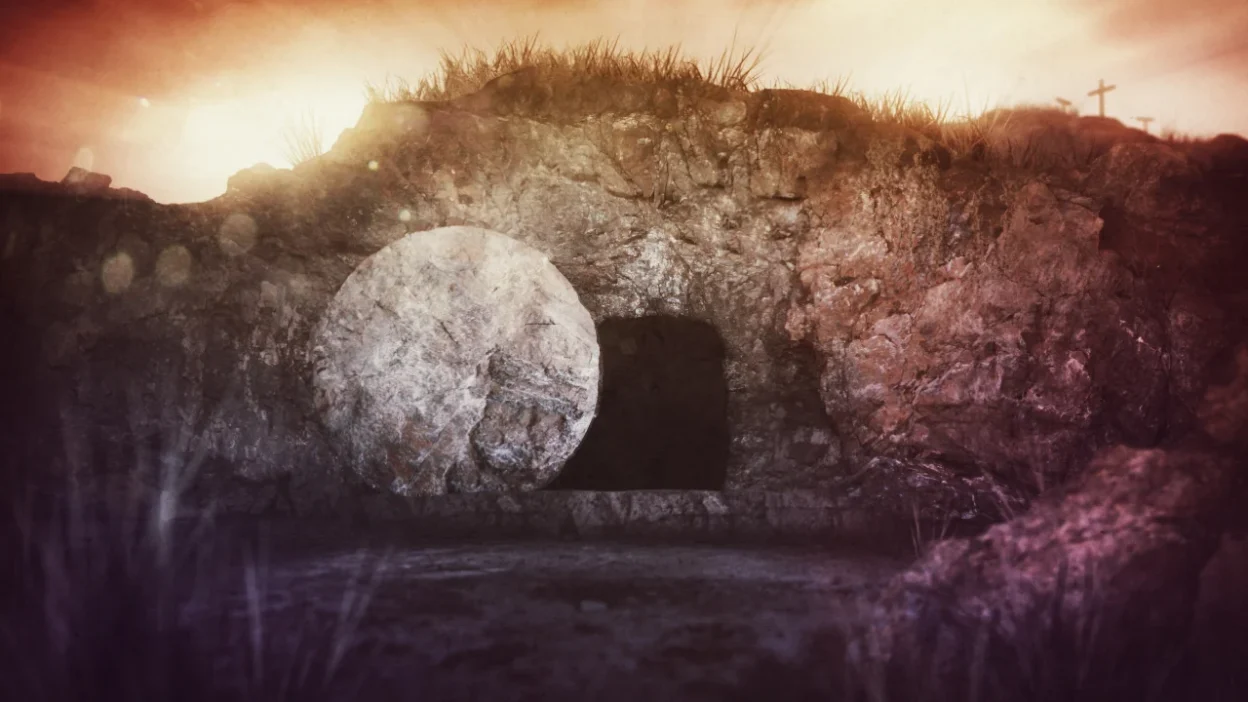
Across the diverse expressions found within Christendom, I have repeatedly witnessed a staggering level of Theological Discombobulation—a rampant and systemic confusion surrounding even the most rudimentary Scriptural statutes. Among these doctrinal failures, one stands out as particularly egregious: our confusion regarding our most fundamental precept, the cardinal doctrine of the Gospel itself. Our modern skepticism, compounded by a tradition-based fear of the extraordinary promises found in Isaiah 53, has compelled us to retreat from the full power of the Cross. Consequently, we have settled for a truncated ‘Half-Gospel’ that offers only a fraction of the life Christ secured for us. In this article, we will perform a comprehensive theological analysis to recover the full transformative impact of the Resurrection. If you dare to believe the Word’s report, you will discover that the Cross provides every Disciple of Jesus with an abundant life that defies our human comprehension (John 10:10).
The word “Gospel” (euaggelion) literally means “Good News”—the announcement that Jesus our Messiah arrived and secured a tremendous victory on our behalf. Nevertheless, we are currently facing a crisis where the Church—the very entity that should be proclaiming the Gospel message with absolute clarity—is instead perpetuating what I call a “Half Gospel”. This truncated version of the Good News is not merely a minor oversight; it brings tangible damage to the Church of Jesus Christ by leaving Believers ill-equipped to contend with the works of our Enemy, Satan the Deceiver. Without understanding the “Full Gospel,” the Believer remains exposed to the Devil’s schemes, unaware of his entry points in their life (see Ephesians 4:27), and unable to draw from the full power of the cross. As the Lord warned through the Prophet Hosea:
My people are destroyed for lack of knowledge…
Hosea 4:6
To fully understand the problem we’re facing, we must first make a clear distinction between the “Whole” and the “Half” Gospel messages. The Half Gospel, currently preached in the majority of churches bearing the name of Christ, is a message that focuses almost exclusively on the forgiveness of sins (2 Cor 5:21) and the eventual resurrection of the saints during the Millennial Kingdom (Rev 20:4). While these are glorious and essential truths, they represent only half of the Messianic report. When we preach only this half, we run the risk of diminishing the full glory of the Messiah’s work on the cross. We’re tragically ignoring the full Good News that Christ indeed bore our transgressions as well as our sicknesses and physical pains in equal measure, granting to us His precious mercies along with divine healing of the body.
As a passionate advocate for Biblical Cosmology, I have spent ample time teaching on the literal structure of God’s terrarium known as Earth–a massive vivarium covered by the firmament and submerged in a heavenly ocean (2 Peter 3:5). Nevertheless, while cosmology is the first topic encountered in the Bible, and creation provides us the evidence necessary to believe in God (Rom 1:20), the cosmological doctrines remain forever second to the supremacy of the Gospel message. You can understand the shape of the Earth and yet be an apostate for you cannot enter the Kingdom of Heaven without believing the report of the Gospel, specifically the resurrection of Jesus Christ (Rom 10:9). This good report found in Isaiah 53 is the very foundation of the Christian Church, and our wholeheartedly believing it is the key to unlocking the Abundant Life our Lord Jesus promised to render to us through His death and resurrection.
The thief comes only to steal and kill and destroy; I came that they may have life, and have it abundantly.
John 10:10
Recovering the “Whole Gospel” means returning to the ancient paths and looking at the report of the Prophet Isaiah. We must settle this in our hearts: if we believe only half of the Gospel, we will only experience half of the victory that Jesus painfully delivered unto us. In honor of His monumental work on our behalf, we are going to intricately analyze the text of Isaiah 53 in order to reveal the true and total Gospel—the message of total redemption of our spirit, mind, and body. It is time to abandon “easy believism” and begin believing the full report of what the Son of Man accomplished on the old rugged cross.
Restoring the Full Report of Isaiah 53
Seven times—that’s the number of times the New Testament cites the exact same chapter in Isaiah, declaring it to be the “Good News” message of the Gospel (see Rom 10:15-17, 1 Peter 2:24, Matt 8:16-17, John 12:37-41, Luke 22:35-37, Mark 15:25-28, Acts 8:26-35). In the Kingdom of God, your salvation hangs on your response to this holy report. Isaiah 53:1 asks every reader the question: “Lord, who has believed our report?” This ominous question implies that the message we inherit in this chapter of Isaiah is not often received in its fullness.
Your salvation, your physical health, and your mental peace hang on whether you believe the full report of Isaiah or a truncated, tradition-compromised version of it. We must move past the al-la-carte approach to the cross, believing in the forgiveness of sins and the resurrection of the body at the end of the age, while neglecting the equally miraculous portions of the message that are equal in value and promised for the now. Among these promises, the most commonly cited portion of the message is found in Isaiah 53 verses 4 and 5:
“However, it was our sicknesses (holi) that He Himself bore, And our pains (mak’ob) that He carried; Yet we ourselves assumed that He had been afflicted, Struck down by God, and humiliated. But He was pierced for our offenses, He was crushed for our wrongdoings; The punishment for our well-being was laid upon Him, And by His wounds we are healed.”
Isaiah 53:4-5 NASB2020
The Father of Lies has worked tirelessly to hide the miracle power of the Gospel by changing the words in our translations. For those who do not believe this to be possible, Jeremiah 8:8 explicitly warns the Word of God can be tampered with, often by mistranslations, when stating “the lying pen of the scribes has made it into a lie.” Case in point, most English translations render Isaiah 53:4 to read: “Surely our griefs He Himself bore and our sorrows He carried.” A total adulteration of the text, as proven by Matthew 8:16-17! While Jesus certainly cares for our mental anguish, “griefs” and “sorrows” are not the proper words inspired by the Holy Spirit here.
The Hebrew words are correctly translated in versions like the Complete Jewish Bible (CJB). The CJB, as well as the NASB 2020, properly render the text using “sickness”and “pain.”
- Holi (Sickness): Refers to physical illness or disease.
- Makob (Pain): Refers to physical pain first, and mental pain second.
Jesus bore physical sickness and physical pain just as much as He bore our sins. If we diminish one to exalt the other, we do a great disservice to both the listener and the Gospel message itself. The consequence of sin is sickness, death, and eternal damnation. The benefit of the forgiveness of sin is health, life, and eternal salvation. We’re redeemed from the Curse of the Law (Gal 3:13), and instead given the blessings of Deuteronomy 28. This is the necessary, complete, and divinely inspired understanding revealed to us throughout Scripture (see Psalm 103:3), especially in Isaiah 53.
Bless the Lord, O my soul,
Psalm 103:2-4
And forget none of His benefits;
Who pardons all your iniquities,
Who heals all your diseases;
Who redeems your life from the pit…
Early Church Evangelism
If you want to believe the Full Gospel, you must comprehend the complete work of Jesus as prophesied in Isaiah 53. This single chapter is the blueprint used by the Holy Spirit to reveal both the Messiah’s mission and the observable effect of His efforts on our behalf. It is the very foundation of the New Testament message, and the very passage the early church often cited when proclaiming the Good News to those who had not yet come to know Christ.
In Acts 8, we find Philip the Evangelist being led by the Spirit to a desert road. He encounters an Ethiopian eunuch, a man of high authority, sitting in his chariot reading the Prophet Isaiah. When Philip approaches, the man is specifically reading from Isaiah 53 and asks to be enlightened as to its meaning. Philip did not have a pocket-sized New Testament to hand the eunuch; the books of Matthew, Mark, Luke, and John hadn’t even been written or compiled yet. Instead, the text tells us “Philip opened his mouth, and beginning with this Scripture he told him the Good News about Jesus” (Acts 8:35).
The result was immediate: a confession of Jesus Christ, water baptism, and an eternally redeemed man. This story serves as a crucial example of strategic evangelism for us to imitate today. If Isaiah 53 was the key passage of holy Scripture Philip employed to get a man saved and baptized, it remains equally effective for us who preach the “Good News about Jesus” to utilize in our modern world. To the Evangelists, and every Believer: we must preach the full report found in Isaiah 53, lest we fail to preach the whole Gospel message to the lost. People may confess Christ and be baptized under a partial Gospel, but we are responsible before God for preaching the whole report.
Furthermore, look at the miracle power released when the “Whole Gospel” is preached. When Philip finished, the Spirit of the Lord snatched him away—literally teleported him—and he found himself at Azotus, ready to continue proclaiming the Full Gospel. Supernatural miracle power of all kinds is released when Isaiah 53 is both proclaimed and believed. Paul affirmed this truth to the Galatians with the rhetorical question:
So then, does He who provides you with the Spirit and works miracles among you, do it by the works of the Law, or by hearing with faith?
Galatians 3:5
Biblical Faith: Confident Expectation
To believe the report, and receive it’s miraculous promises, one must understand the nature and definition of faith. Biblical faith is not a mere “I hope it happens someday” or a vague “I wish it were true” feeling. According to Hebrews 11:1, literally translated, faith is “confident expectation, conviction it is done while not seen.”
Eστιν δὲ πίστις ἐλπιζομένων ὑπόστασις, πραγμάτων ἔλεγχος οὐ βλεπομένων.
Hebrews 11:1 GREEK
The word commonly translated as “things” in this verse is the Greek word Pragma (πρᾶγμα). In its primitive root, this refers to “that which has been done”—an accomplished fact or a deed already performed. True faith is the conviction that the promise is already an “accomplished fact” simply because God spoke it. If God said, “By His wounds you are healed,” then your healing is a Pragma—a deed already done in the spiritual realm that your physical body must eventually align with. This is why Paul declared “for we walk by faith, not by sight” (2 Cor 5:7) when walking with the Lord.
Furthermore, Romans 10:17 tells us that faith comes from “hearing and hearing continually the Word of Christ.” In the original Greek, the word dia is used, indicating we must hear “continually,” an ongoing daily practice in order to increase our faith (Luke 17:5-6). Sometimes the truth doesn’t “stick” the first time—we need the continual intake of Scripture to build the same confident expectation the Roman Centurian possessed.
…just say the Word, and my servant will be healed.”
Matthew 8:8
Think of building spiritual faith like building physical muscle in the gym. It would be foolish to go to the gym, work out once, and ask why you don’t look like Arnold Schwarzenegger the next day. Consistent repetition is the only way to build massive muscles. In the same way, if you read the promises of the Bible once and quit when they don’t manifest immediately in the physical realm, you commit the same error the lazy would-be body builder. Faith comes by hearing and hearing and hearing, it is the life practice of the Christian and not a temporary religious fad.
Consider this, the disciples failed to heal a sick child in the Gospel of Matthew (see Matthew 17:14-20). Nevertheless, after continual training in the Word, the same disciples were later raising the dead in the Book of Acts (see Acts 9:40)! What changed? Their faith increased through continual hearing of the Words of Jesus. If we want to walk in the miracle power promised by our Lord in Mark 11:22-24, we must likewise continually hear the Word of God on a daily basis. Jesus is the Bread of Life, His Word is our Daily Bread. As we continually hear the Word, we must then place full confidence in the statements and act on that belief in our daily life. If we believe the Words of Jesus, we will receive His promises (Mark 11:24); if we don’t, we won’t (James 1:6).
The apostles said to the Lord, “Increase our faith!” 6 And the Lord said, “If you had faith like a mustard seed, you would say to this mulberry tree, ‘Be uprooted and be planted in the sea’; and it would obey you.
Luke 17:5-6
The Four-Fold Redemption of the Cross
The Gospel is not just “fire insurance” for your soul. It is a comprehensive rescue mission, a redemption of all that was corrupted when we fell in the Garden of Eden. Through sin, death and its precursors entered creation. Jesus came to “destroy the works of the devil” (1 John 3:8) and restore us to our edenic state of being. This is precisely why Isaiah 53 lists four specific ailments that Jesus bore on the cross on behalf of those who believe:
- Sickness or Illness: (Verses 3, 4, and 10)
- Pain or Dis-ease: (Verses 3 and 4)
- Sin: (Verses 5, 6, 8, 11, and 12)
- Death: (Verses 8, 9, and 12)
To understand why Jesus had to bear sickness, we must understand the Curse of the Law, which laid hold of us through our sins. In Galatians 3:13, Paul explains that “Christ redeemed us from the curse of the Law, having become a curse for us.” If you read the comprehensive outline of the Curse in Deuteronomy 28, you realize it is significantly longer than the list of blessings. Among the plagues warned of in the Curse, Moses writes “also every sickness and every plague which is not written in the book of this Law, the Lord will bring on you until you are destroyed” (Deut 28:61). This is a fundamental legal reality: Sickness is a curse of the Law, a direct consequence of sin. Sickness is not a result of failing to wash ones hands–Jesus touched, and healed, the lepers! Sickness is a result of sin, period. This is why James writes:
Therefore, confess your sins to one another, and pray for one another so that you may be healed. The effective prayer of a righteous man can accomplish much.
James 5:16
If Jesus bore the entire curse on the tree, then He bore your sickness just as surely as He bore your adultery, your lies, and your rebellion. Sin and sickness are tied together (Matt 9:6); illness is often the “vehicle” or precursor utilized by our Enemy (Acts 10:38) to bring death, the ultimate wage of sin (Rom 6:23). Nevertheless, our Lord and Messiah Yeshua has redeemed us from sin and granted us eternal life, Hallelujah! That is the Good News!
The Package Deal: Sin and Sickness
Among the works of the Kingdom of Darkness, sin and sickness are inseparable. We see this link all throughout the Biblical narrative, especially the Psalms:
- Psalm 38:3: “There is no soundness in my flesh because of your indignation; there is no health in my bones because of my sin.”
- Psalm 103:3: “Who pardons all your iniquities, Who heals all your diseases,”
- Psalm 107:17-18: Fools are afflicted because of their “rebellious way” and “iniquities,” drawing near to the “gates of death.” But notice what happens when they repent in Psalm 107:20: “He sent His Word and healed them.”
God doesn’t just send a feeling; He sends His living and active Word. When God speaks, matter obeys. “Let there be light,” and there was light (Gen 1:3). When God says you are healed, you are healed—if you believe the report and do not doubt (see James 1:6-7).
God is not a man, that He would lie, Nor a son of man, that He would change His mind; Has He said, and will He not do it? Or has He spoken, and will He not make it good?
Numbers 23:19
This is why Jesus, after healing a man in John 5:14, warns him: “Behold, you have become well; do not sin anymore so that nothing worse happens to you.” He is affirming the direct connection between individual sin and physical ailment. Jesus is happy to heal you by faith, but in love, He warns you to stop the behavior that invites the curse back into your life.
The Corinthian Judgment: A Warning to the Baptized Believer.
Many in the Lawless Grace camp assume that once they are baptized, they are no longer bound to the Law of God, and are consequently immune to the physical consequences of sin. This is a Doctrine of Demons I thoroughly address in my article “The Order of Melchizedek.” This notion is soundly refuted in 1 Corinthians 11 when Paul addresses a body of baptized believers who were sinning against the body and blood of Christ by getting drunk and being gluttonous during communion. The result?
“For this reason many among you are weak and sick, and a number sleep (have died).”
1 Corinthians 11:30
Paul isn’t speaking in mysteries; he is stating a verified proof. Because they did not “judge themselves rightly,” they came under God’s physical judgment. They weren’t condemned to Hell—they were “disciplined by the Lord so that they would not be condemned along with the world”—but they were still weak, sick, and dying. Why? Because they were living in sin, and therefore below the “Default Setting” of the Gospel. Health is the default for the Christian because Jesus already bore their sicknesses in His body on the cross. If you repent and return to the “Obedience of Faith” (Rom 1:5), the default is restored. Sin causes sickness, forgiveness heals sickness–by faith.
and He Himself bore our sins in His body on the cross, so that we might die to sin and live to righteousness; for by His wounds you were healed.
1 Peter 2:24
The Authority of the Son of Man
In Matthew 9, a group of friends lowered a paralyzed man through a roof. Jesus, seeing their communal faith, said: “Take courage, son; your sins are forgiven” (Matt 9:2). When the Pharisees accused Him of blasphemy, Jesus asked a rhetorical question: “Which is easier, to say, ‘Your sins are forgiven,’ or to say, ‘Get up and walk’?” (Matt 9:5).
As humans, we think one is “harder” than the other. But to Jesus, both are equally easy and equally provided by Him. He packaged them together not only to prove He had authority, but also to demonstrate that when where sin is forgiven, healing can manifest. Crucially, the crowd glorified God who had “given such authority to men.” Many think Jesus did this in a “Fully Divine” state, but the Epistles tell us He “emptied Himself” of His divine abilities. He accomplished this as the Son of Man—a lowered, weakened state. This is why Jesus declared “he who believes in Me, the works that I do, he will do also; and greater works than these he will do; because I go to the Father” (John 14:12). He promised that we would do “even greater works” because this authority to receive and give these promises is bestowed to us, the “sons of men,” by the Holy Spirit.
The Woman with the Issue of Blood
The story of the woman with the issue of blood in Mark 5 provides a perfect example of how biblical faith operates. This woman had spent all she had on physicians and only grew worse for twelve years, a story not unlike many living today. After hearing about Jesus, she didn’t just hope in the “maybe it will happen” sense; she possessed a confident expectation that God would fulfill His promise to heal through the Messiah.
She believed a specific Messianic promise from Malachi 4:2—that the Messiah would come with “healing in His wings.” In the Hebrew context, “wings” (kanaph) refers to the tzitzit or tassels at the edge of a garment. She said to herself, “If I just touch His garments, I will get well.” She did not beg Jesus to heal her; she believed the promise already written. When she acted on that belief, the power of God went out from Jesus automatically. Many others were “pressing in” and touching Him, but only she touched Him in faith, and only she was Sozoed.
And He said to her, “Daughter, your faith has made you well (sozo); go in peace and be healed of your affliction.
Mark 5:34
The Linguistic Key: Katharizō and Sozo
When we “rightly divide the Word,” we often find that English translations smooth out the “rough edges” of the original Greek in order to make the text more poetic and palatable. Unfortunately, this approach often leaves us with a final rendering found wanting. Like Pragma, two words which often do not find themselves well translated or fully understood by the reader are Katharizō and Sozo.
- Katharizō: In 1 John 1:9, translated as “cleanse” sounds like a spiritual metaphor. However, the Greek word is katharizō. In the physical sense, this word specifically means “to make clean from disease,” to be healed from an ailment such as leprosy. The “Full Gospel” teaches that after you are forgiven, you are physically cleansed of the diseases that were the result of the sin.
- Sozo: This fundamental Greek word is used over 100 times in the New Testament. It has a two-fold meaning: (1) to save from peril or Hell, and (2) to restore to health. When Paul says in Ephesians 2:8, “For by Grace you have been saved (Sozo) through faith,” he is telling you that you have been both forgiven and healed by a gift of God. This is why the same Sozo is employed in Mark 5:34. which we just read above.
Will You Believe the Report?
Now that all has been heard, with you believe the full report of the Gospel? We are living in an identity crisis where the Church has forgotten her full redemption. This is why the Prophet David reminds us to “bless the Lord, O my soul, and forget not all his benefits” (Psalm 103:2). There is a deceiver on Earth—Satan—who is speaking to people within the Church, telling them that some of God’s promises are “Yes” and some are “No.” However, the Scriptures emphatically confirm that all the promises are “Yes” in Christ Jesus, and our response must be “Amen!”.
For as many as are the promises of God, in Him they are yes; therefore also through Him is our Amen to the glory of God through us.
2 Corinthians 1:20
- If you are sick, you must call for the Elders, be anointed with oil, and the “prayer offered in faith will restore (Sozo) the one who is sick” (James 5:14-16).
- If you have sinned, confess you sins and you will be forgiven (1 John 1:9). Likewise, ask for healing in faith and you will be healed (James 5:16), but you “must ask in faith without any doubting, for the one who doubts is like the surf of the sea, driven and tossed by the wind. For that man ought not to expect that he will receive anything from the Lord,” (James 1:6-7).
Truly I say to you, whoever says to this mountain, ‘Be taken up and cast into the sea,’ and does not doubt in his heart, but believes that what he says is going to happen, it will be granted him.
Mark 11:23
Healing is not a “maybe.” Divine Healing is a fundamental promise of the New Covenant, and rejecting it is to reject half of the Gospel. We must settle this in our hearts: the full message of the Gospel is that Christ bore our sins and all the effects of those sins, including our sickness, pains, and our death. We must reject the status-quo Half Gospel, and believe the Whole Gospel the Lord has offered us!
The Sword of the Word divides those who believe the report from those who succumb to fear, unbelief, and tradition. I implore you, do not be “wise in your own eyes.” Repent and believe in the full redemptive power of the cross; embrace the Full Gospel.
As the Prophet Isaiah declared: By His wounds, you were healed.
Do you believe the report?
…when the Son of Man comes, will He find faith on the Earth?
Luke 18:8


I’ve been exploring for a little for any high-quality articles or blog posts on this kind of area . Exploring in Yahoo I at last stumbled upon this website. Reading this information So i’m happy to convey that I’ve a very good uncanny feeling I discovered just what I needed. I most certainly will make sure to do not forget this site and give it a look regularly.